Every few months, a new foreign school management platform lands a sales pitch in a Nigerian proprietor's inbox. The pitch is always confident. The platform works in thirty countries. Four million students use it. The branding is beautiful. There is a free trial.
The proprietor signs up, spends a week trying to configure it, and goes back to Excel.
This happens constantly. Not because Nigerian proprietors are technology-averse. They are not. The proprietors running real schools in Lagos and Ibadan and Abuja are deeply pragmatic. If a tool saves them time, they adopt it. What they are not willing to do is pay in foreign currency, in foreign denominations, for a system that assumes their schools run like schools in Texas or Manchester.
This post is about the specific ways global school software keeps failing Nigerian schools, and why the failure is structural, not cosmetic.
The price problem
Start with the one thing most conversations about software avoid. Price.
A typical global school management platform charges somewhere between $50 and $300 per month for a basic tier. At current exchange rates, call that roughly 75,000 to 450,000 naira per month. The lowest tier is often the useful one: a mid-sized school with two hundred students will not fit in the entry plan. Realistic pricing for a useful tier, for a Nigerian private school, lands around $100 to $150 per month. Between 150,000 and 225,000 naira. Every month.
The foreign company is not being greedy. That price is reasonable in countries where the monthly budget of a mid-sized private school sits in the tens of thousands of dollars. A school in Boston or Nairobi might spend that amount on a single outside professional development session for one teacher.
The problem is that the Nigerian school is not that school.
A typical Nigerian private school with two hundred students, charging 80,000 naira per child per term, brings in roughly 16 million naira across three terms. From that, the proprietor pays teachers, rent, generator diesel, WAEC and NECO fees, examination materials, maintenance, marketing, food for boarders if there are any, and still tries to have margin left. Spending 150,000 to 225,000 naira a month, which is 1.8 to 2.7 million naira a year, on a single software platform would be a quarter to a third of annual profit, at best.
No responsible proprietor does this. The math does not work. It is not a question of willingness. It is that the pricing model was never designed for a school whose revenue sits in Naira and whose costs hit in Naira and whose margins are single-digit percentages.
Nigerian private schools can pay for software. What they cannot pay is software priced in a currency that does not match the currency their fees come in, at tiers built for markets with ten times the purchasing power per student.
The grading problem
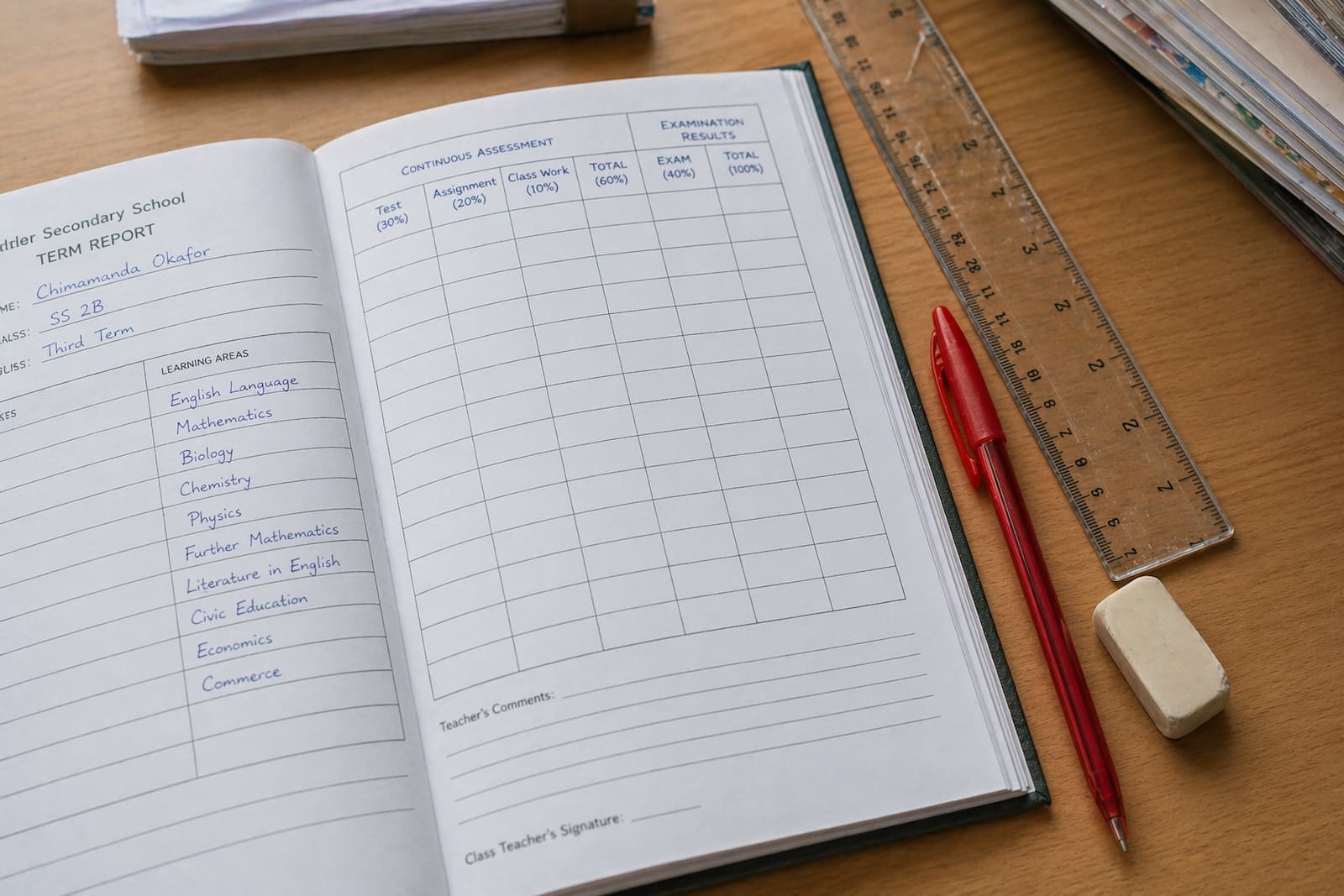
A Nigerian school has Continuous Assessment 1, Continuous Assessment 2, and a final exam. Commonly weighted 20, 20, and 60. Grades convert to a six-band letter scheme that starts A at 75, not 90. These three assessments are entered and tracked separately, rolled up into a term grade, rolled up again into a session grade across three terms, and printed on a report card layout that is visually specific to Nigerian education.
Foreign software assumes one score per student per subject. That single score, somewhere between 0 and 100, becomes a percentage, which becomes a letter grade using American or British cutoffs, which prints on a report card layout that looks like a foreign report card.
A Nigerian school cannot use this. The teacher ends up calculating CA1 + CA2 + exam on her own, entering the total into the tool, and then rebuilding the actual Nigerian-style report card in Excel anyway. The software adds a step rather than removing one.
This is not a minor incompatibility. It is the grading model of Nigerian education being ignored by software that does not know it exists.
The parent problem
Foreign school platforms are built on a specific assumption about how parents engage with schools: the parent logs into a dashboard, reviews their child's progress at their own pace, maybe sets up email notifications for anything urgent. The model is passive-pull. The parent goes to the information.
That assumption does not fit Nigerian parent culture.
A Nigerian private school parent expects the school to come to them. A fee reminder should arrive as a message, not as a line item waiting to be discovered in a dashboard. An attendance issue should ping them the same day, not appear in a weekly summary email that goes unread. A report card should land in their hand or their phone at end of term, not sit in a portal they need to remember to check.
Parents still want structured information. They want to see their child's grades. They want attendance records. They want fee balances. They want digital report cards. A parent portal is genuinely useful, and most Nigerian parents will engage with one if it is well-designed and the information is up to date.
But the portal cannot be the only touchpoint. A Nigerian school needs to reach parents where parents already are, and Nigerian parents are on many channels at once. Some check email. Most check WhatsApp. All of them read SMS. A growing number use in-app notifications, but only if the school's app is already something they trust. A communication system that only works through one of these channels is a communication system that loses the other parents.
Most foreign platforms offer a parent portal, maybe an email notification, sometimes a branded parent app, and stop there. Nigerian schools need more than that. Announcements need to go out through every channel a parent might be on, so the information reaches them whether they are on their laptop at work, on WhatsApp with their spouse, or checking SMS in traffic. The portal is for when parents want to come to the information. The push channels are for when the information needs to come to them.
Foreign platforms built for single-channel markets were never designed for this. Nigerian platforms have to be.
The infrastructure problem
Nigerian internet works. Most of the time. But Nigerian power does not, and when the power goes off, the router goes off, and the school's internet is gone until the generator comes on.
Nigerian schools also run on phones more than laptops. A typical class teacher does not have a school-issued laptop. She has her personal Android, often older, often with limited data. She grades from the phone. She takes attendance from the phone. She checks the class parent group from the phone.
Software built for American high schools assumes a computer at every teacher's desk, a fiber connection, a Chromebook cart. Software that works in Nigeria assumes a phone, intermittent connectivity, and a teacher who will use it on a short break between classes.
Most global platforms are technically phone-compatible in the sense that they load in a mobile browser. "Phone-compatible" is not the same as "phone-native." A real phone-first tool has larger tap targets, fewer nested menus, faster initial page loads, and works on a slow connection without timing out. These are design choices. Most global platforms did not make them, because they were not built for this context.
The payment problem
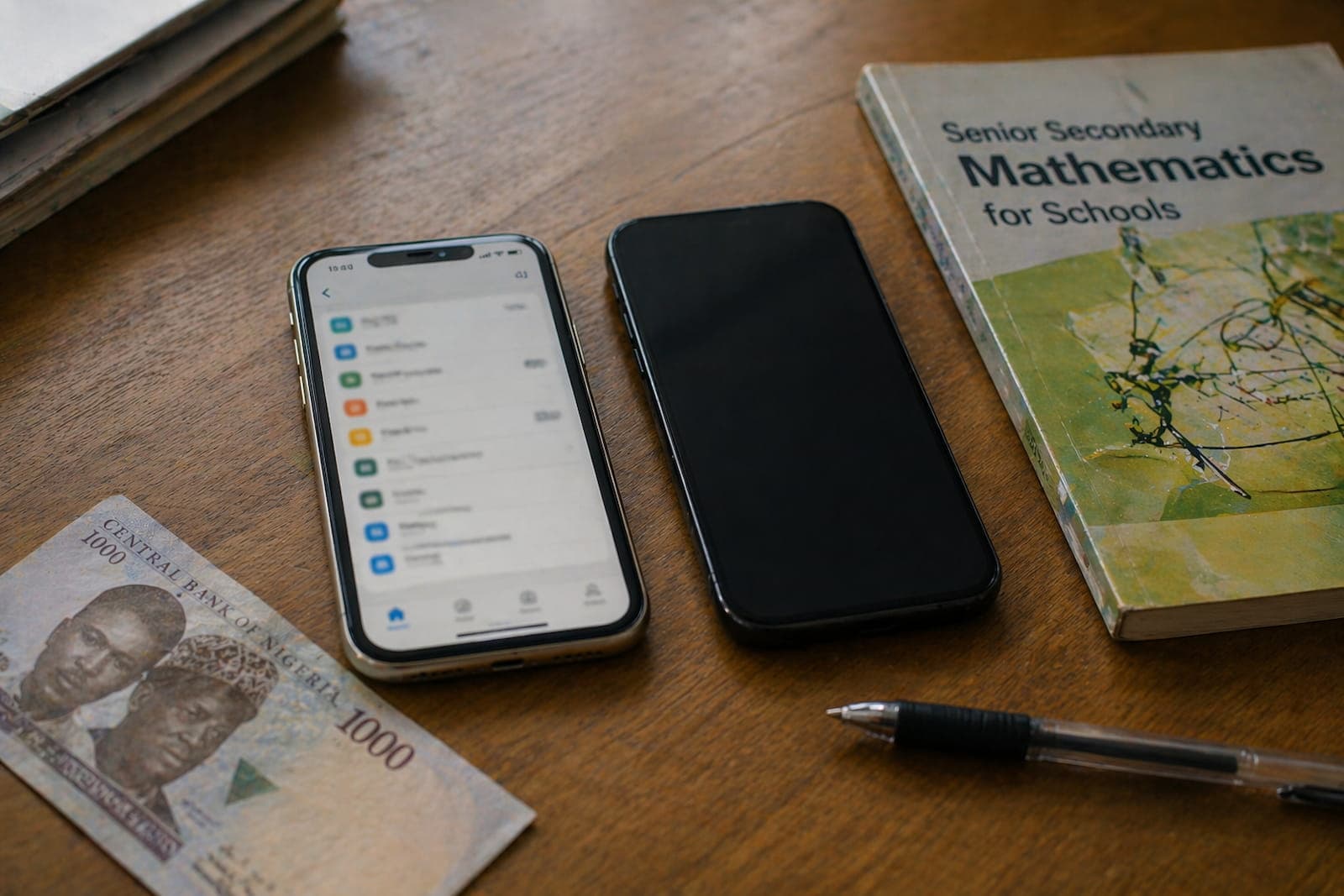
If a Nigerian school does pay for software, they need to pay in Naira, by bank transfer or a local card. Paystack works. Flutterwave works. Foreign Visa and Mastercard charges, for most Nigerian schools, do not.
Nigerian banks restrict international cards for school-sized expenses. Dollar-denominated subscriptions on foreign bank cards often fail, get declined after a few months, or incur large conversion fees the school never quite accounted for. The proprietor budgets for a specific Naira amount, and the bill hits at a different Naira amount every month because the exchange rate moved.
Foreign platforms rarely accept Nigerian local payment methods cleanly. Some try Stripe's limited Naira support. Most just expect dollar card payments and quietly lose the customer when the card declines.
Payment in the local currency through the local payment rails is not a nice feature. It is the difference between a school being able to use the software at all and a school giving up on it in month three.
Why local is structurally better
It would be easy to write this post as a pitch. The truth is simpler. Nigerian schools do not need a better imported platform. They need software that was designed from the start for a Nigerian school's grading model, currency, connectivity, parent culture, and report card conventions.
Some of those details, a global platform could theoretically add. Nigeria-specific grading. Paystack integration. Multi-channel parent push. Mobile optimization. In practice, they will not, because the Nigerian market is too small a slice of their revenue to justify the engineering cost. The companies serving thirty countries cannot afford to localize the software to the point of being actually usable in any one of them.
The only platforms that solve all these problems together are platforms built inside the country, for the country.
What to do next
If you are a Nigerian school proprietor who has already tried a foreign platform and given up, you are not alone. Your instincts were correct. The tool was not built for your school.
SLAET was built in Nigeria, for Nigerian schools, and prices in Naira at tiers that fit Nigerian school budgets. Grading matches how Nigerian schools grade. Payments run through Paystack. Parent communication reaches parents through every channel they already use. The phone experience is the primary experience.
Start free, see if it fits, and move on if it doesn't. The goal is software that actually works for your school, wherever that software comes from.