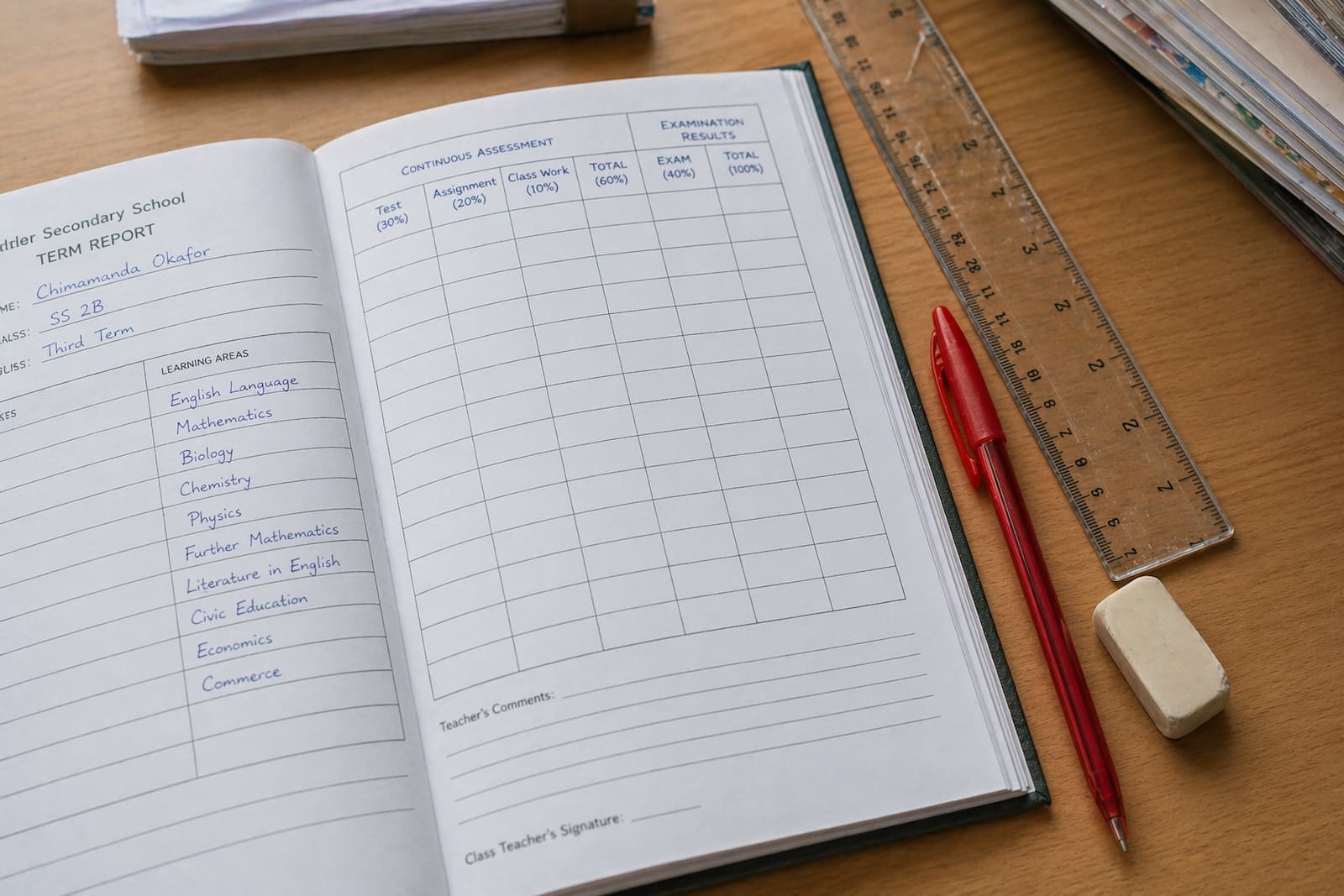
Nigerian schools love Excel for one obvious reason: it is free. Any computer with Microsoft Office can run it. Any bursar who knows basic formulas can use it. Any proprietor who needs a report "just exported to Excel, please" understands instantly.
Which is why a typical Nigerian school's administration runs on thirty Excel files.
Fee collection, in one file. Class attendance, in another. Teacher salaries, in a third. Student admissions, in a fourth. Report card drafts for each class, in twelve more. Budget for the term, end-of-year summary for the board, staff birthdays for the newsletter, list of parents who still owe fees from two terms ago, transportation routes, exam timetable, supplier invoices.
Excel is not one tool in the school. Excel is the school, scattered across thirty files on four laptops and two USB drives.
Why schools default to Excel
Before we talk about the cost, we should be honest about the appeal. Excel did not become the default by accident.
It is free, or close to it, for anyone running a Nigerian school that already owns a Windows machine. It is familiar, because almost every Nigerian administrator learned it in secondary school or at a government training. It is flexible, because a bursar can build whatever she needs, her way. It is offline, which matters in a country where internet gets cut mid-morning.
These are real advantages. A school that runs on Excel is often a school whose administrator is competent, improvisational, and unwilling to wait for perfect software. That is a feature of the person, not a failure.
The problem is not that Excel exists. The problem is what Excel costs once a school has been running on it for two or three years.
The five hidden costs of Excel
Time. The bursar of a 200-student Nigerian school, tracking fees in Excel, will spend between eight and twelve hours a week on fee reconciliation. Parent pays 50,000 naira by bank transfer, the bursar logs it. Another parent pays part-cash-part-transfer, the bursar logs it. A receipt needs to be printed, the bursar prints it. A parent's balance needs to be confirmed, the bursar searches three files. At end of term, the bursar produces a debt schedule, which means opening every row and calculating what's outstanding. This is work a proper fee management system does in seconds. A bursar is paid for a full month of work, but if a full week of that month goes into reconciling spreadsheets that software would handle in minutes, the school is paying her salary to do rework the computer should have already done.
Errors. Excel formulas work until they don't. A cell reference drifts when someone inserts a row. A SUM that used to run from B2 to B180 now runs from B3 to B180, quietly dropping one student's payment. A date is entered as "12/5" in a column where everything else is "12-May", and the sorting breaks. A teacher rounds one grade up and the percentage no longer matches the letter. These errors are invisible until a parent calls the bursar or a student's report card is wrong in front of their family. By the time the error is caught, the damage is done.
Fragility. Excel files live on specific computers. The bursar's laptop has the fee file. The head teacher's laptop has the results file. A former admin's desktop has the attendance file from last term, but the admin left the school in September, and nobody can find the laptop. A laptop gets stolen. A file gets corrupted. A USB drive fails. A new version of the file is saved without backing up the old one, and the old numbers are gone. Every school running on Excel has at least one story like this. Most have several.
Shareability. Excel files are for the people at the computer with the file. A parent cannot see their child's attendance in real time. A subject teacher cannot see what the class teacher has entered. A proprietor checking in on fee collection from home needs the bursar to email her the file, and the file is slightly out of date by the time it arrives. The information in the spreadsheets exists, but it is locked up where nobody outside the building can reach it. This turns into real operational cost when, for example, the proprietor needs to know fee status before approving a teacher's salary advance, and has to wait until Monday.
Opportunity cost. This is the biggest cost and the hardest to see. Every hour the bursar spends reconciling fees in Excel is an hour she is not spending following up on defaulters, building the budget for next term, or dealing with parent complaints properly. Every hour the head teacher spends chasing results from subject teachers who promised to send their Excel file "by end of day" is an hour she is not spending on actual teaching. Every Saturday morning the proprietor spends trying to merge multiple teachers' grade sheets into one report card document is a Saturday morning she is not spending with her family, or planning the school's next expansion, or sleeping.
Free software that steals weekends is not free.
The number most schools never calculate
A Nigerian private school with 200 students, running fully on Excel, loses roughly 40 to 50 hours of senior administrative time per month to spreadsheet overhead.
Forty to fifty hours is more than a full working week. That is one full week out of every four that the bursar, or head teacher, or proprietor, spends on data entry and reconciliation that a proper system would handle automatically.
That school is paying a monthly salary for a bursar. The bursar is working five days a week. Now account for the reality that one of those five days, every week, is consumed by spreadsheet work. The school is effectively paying a full week of salary, every month, to do the work of a software subscription.
That calculation does not include the errors that get caught the hard way. It does not include the parent trust damaged when a report card shows the wrong grade. It does not include the fee defaults that slip through because Excel is not actively reminding anyone. It does not include the weekend hours that don't show on any payroll.
Excel is free on the receipt. Excel is expensive on the P&L.
What's actually better
The schools that move off Excel into purpose-built school management software rarely go back. Not because the software is perfect, but because the ongoing cost profile flips. A small recurring fee, predictable and visible, replaces the invisible monthly drag of dozens of administrative hours lost to spreadsheet work.
For a Nigerian private school, the math typically works out clearly once a school crosses about 100 students. Below that, Excel's flexibility may still be worth the overhead. Above that, the overhead compounds faster than most proprietors realize.
If you run a Nigerian school and the bursar is working Saturdays to catch up on the fee file, or the head teacher dreads the end of every term because of report cards, or you are the one merging spreadsheets at midnight before a board meeting, Excel is telling you something. It has outgrown the school. Or the school has outgrown it.
What to do next
Audit your school's Excel files this term. Count them. Count the hours per month your admin team loses inside them. Compare that to a month of salary you already pay. Then ask whether the school is getting its money's worth from that time.
If it is not, SLAET's Starter tier is free forever for schools up to 100 students and covers the basics Excel cannot: fees, grades, attendance, parent portal, report cards. For larger schools, our pricing page shows what proper software actually costs, and it is often less than what a school is already losing to spreadsheet work every month.
The goal is not to move to SLAET. The goal is to stop paying the Excel tax.