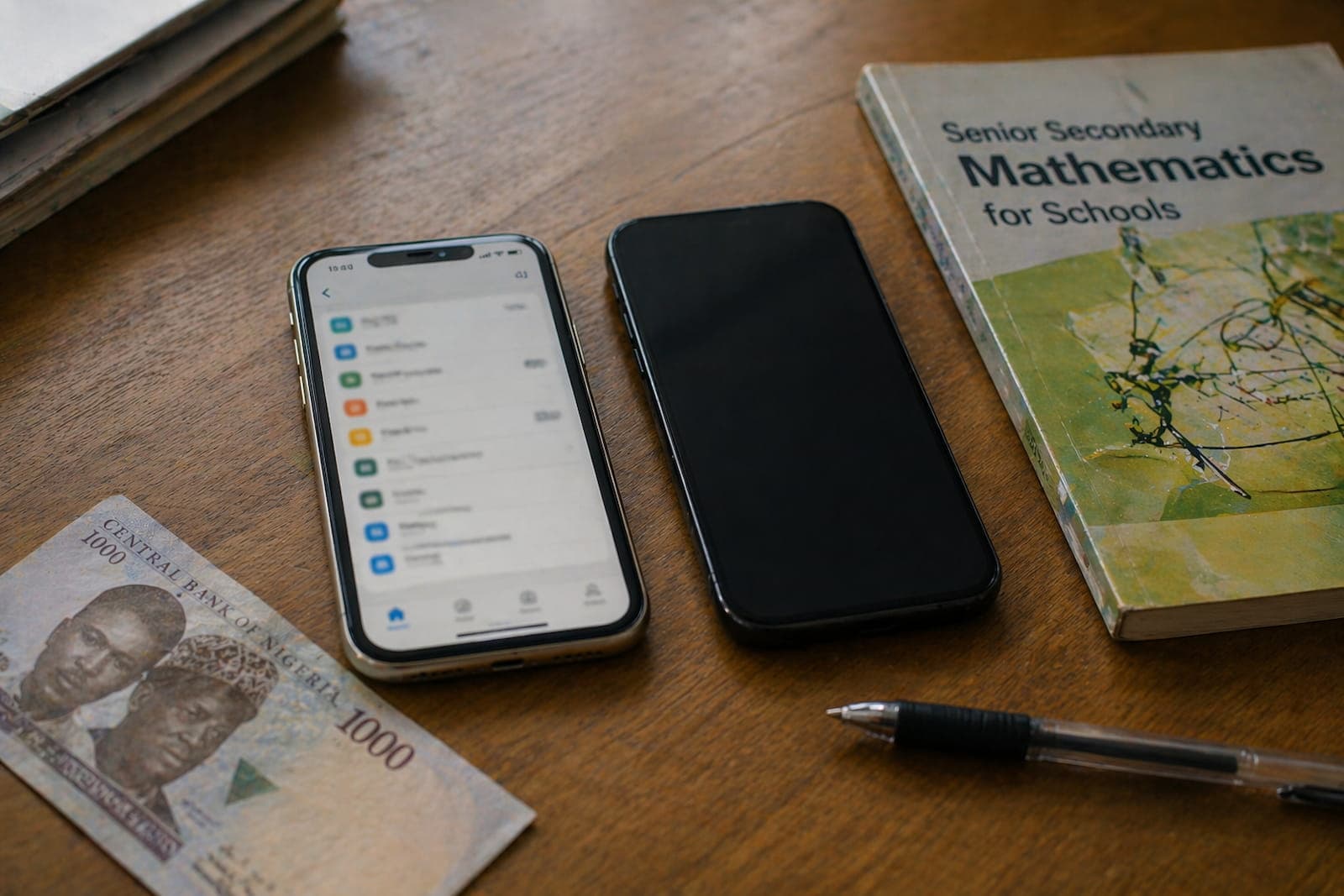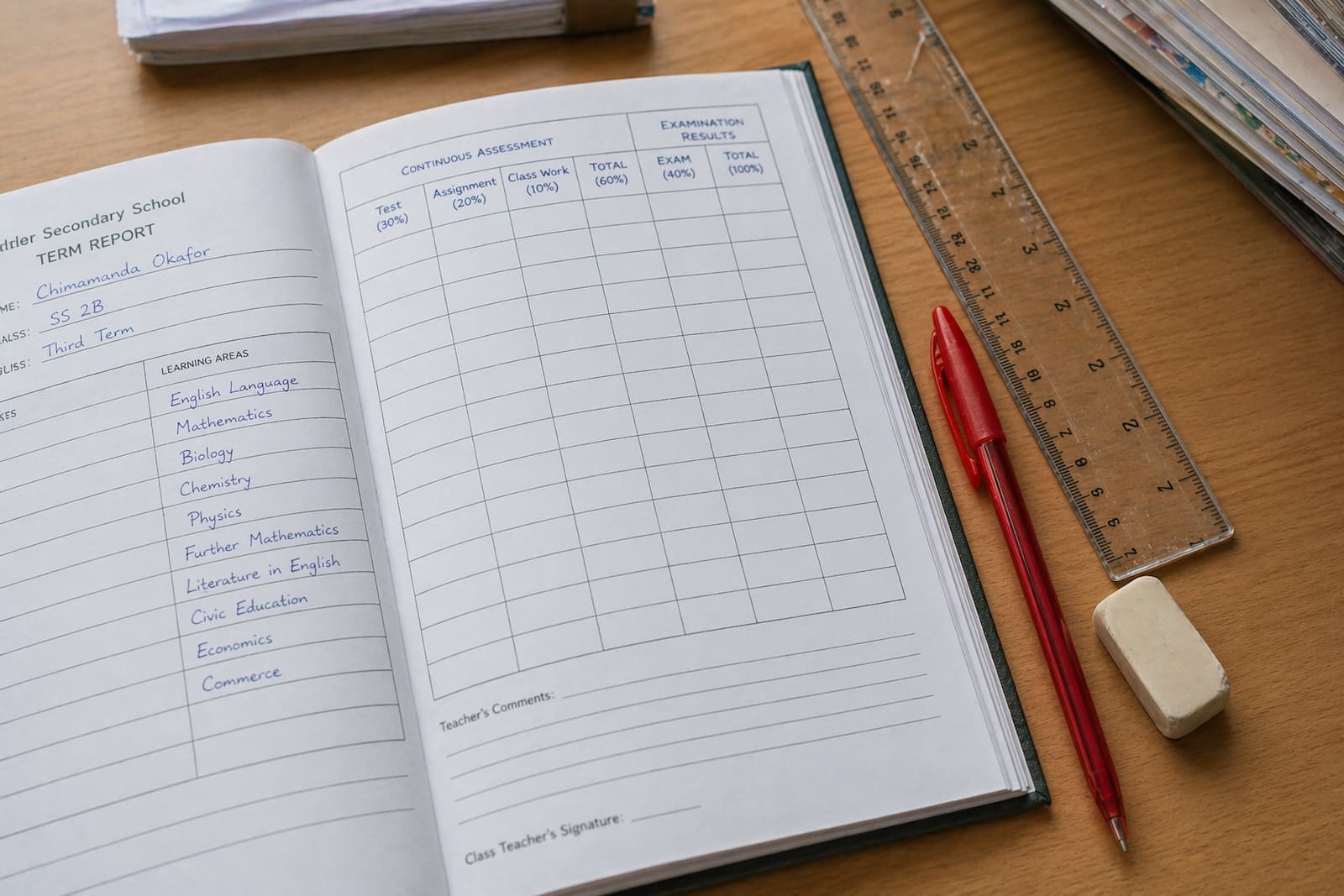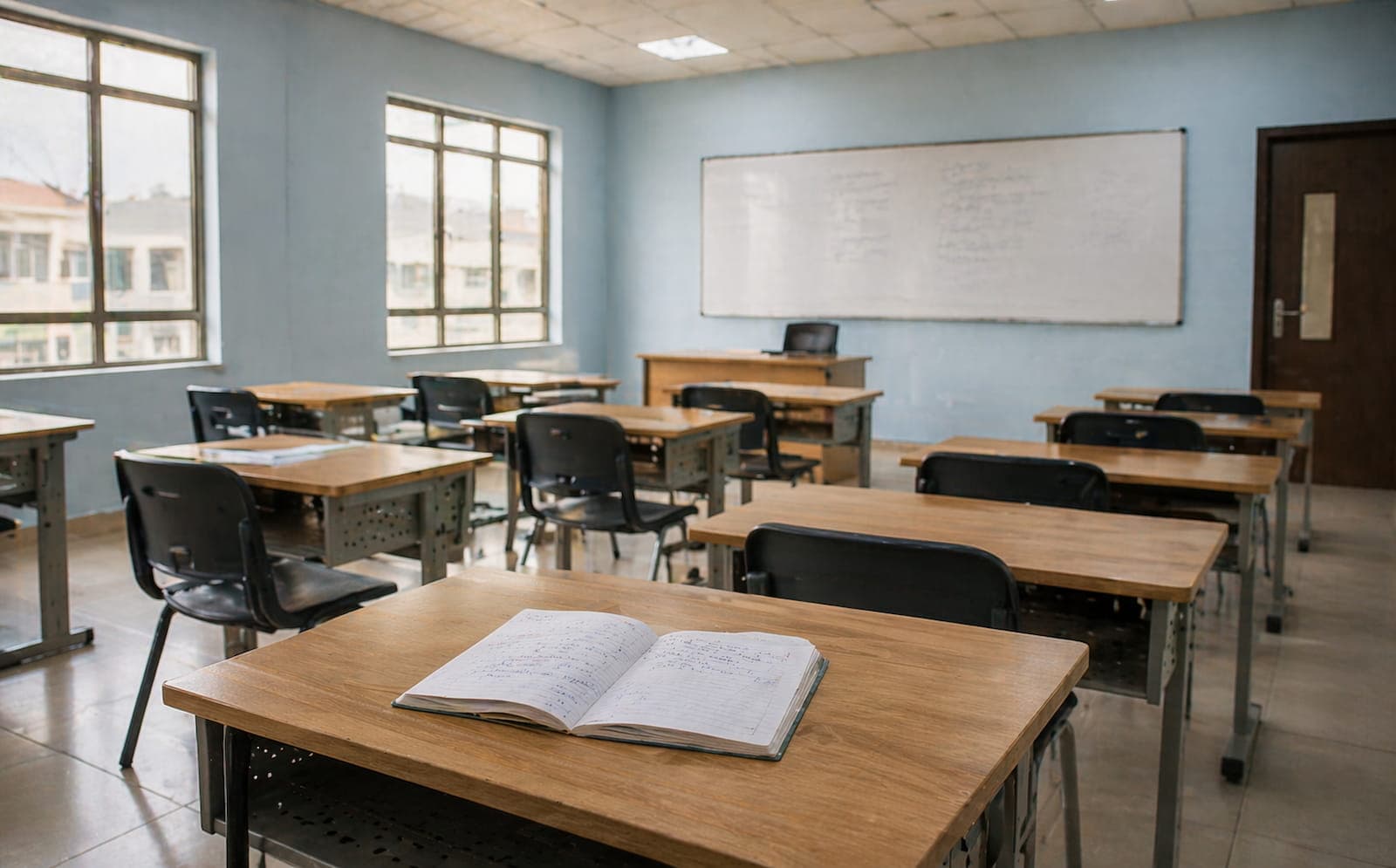
I spent months visiting Nigerian schools before I wrote a line of SLAET.
Lagos, Ibadan, Osogbo, Akure. Not as a founder doing customer interviews, though I did some of that. Mostly as someone who wanted to understand how Nigerian schools actually ran, from the inside, from the view of the people running them.
I sat in a lot of offices. I watched a bursar open her fee ledger. I watched a head teacher work through Excel files that had been emailed to her by different teachers in different formats. I watched a proprietor spend a Saturday afternoon compiling report cards one class at a time, because the system she had was not really a system, it was three different spreadsheets and a lot of patience. I watched a bursar stamp receipt after receipt by hand, a stack of fee payments on her desk, a parent waiting on the other side of the counter for hers.
Before those months, I had a vague idea of what Nigerian school management software should be. I had read case studies. I had looked at global platforms. I had opinions about dashboards and permissions and notifications.
After those months, I had no opinions left. I had evidence.
This post is about what I saw, what it taught me, and why SLAET is shaped the way it is shaped.
What I expected
I grew up in Nigerian schools. I knew the structure. I knew report cards came at end of term. I knew about CA1 and CA2. I knew about fee defaulters and PTA meetings and the particular feel of a Nigerian classroom in the last week before long holidays.
I thought this meant I understood what Nigerian school administration was like.
I did not.
There is a gap between experiencing a school as a student and understanding one as an operator. The things I remembered from being in school were the things students notice. Assembly. Break time. Exams. Teachers I liked and teachers I did not. I did not remember how fees were actually collected, because I was not the one collecting them. I did not remember how report cards were actually assembled, because I only ever saw the finished version.
When I started talking to proprietors and bursars and head teachers, the first thing I realized was how much invisible work was holding every Nigerian school together. Hours of reconciliation. Hours of phone calls. Hours of formatting a report card in Word because no tool produced the layout parents expected.
I had assumed my job as a software founder was to make existing workflows more efficient. What I learned in those months was that the workflows were not inefficient. They were heroic. Nigerian administrators were holding schools together with effort that no software was even trying to save them from.
What I actually saw
I will not pretend every school I visited looked the same. They did not. A school of 800 students in Lekki is not the same as a school of 60 students in a semi-rural part of Osun. The pressures are different. The resources are different. The expectations are different.
But across the schools I spent time in, certain things repeated.
The bursar was always under-resourced. In nearly every school I visited, fee collection and reconciliation rested almost entirely on one person. That person was usually competent, usually overworked, and usually holding information in her head that would disappear if she ever left the school. Nigerian private schools run on bursars. Most of those bursars do not have software that respects what they do.
The head teacher was always putting out fires. Most head teachers I met spent the majority of their time solving the day's problem, not running the school strategically. A teacher did not show up. A parent complained. A student was injured. The head teacher had plans for the week, and the week had other plans.
The proprietor was always working on the weekend. Every single proprietor I visited was doing administrative work on Saturdays and Sundays. Compiling report cards. Reconciling the bank statement. Writing to defaulters. The weekend was when the work that did not fit into Monday to Friday actually got done. And the work did not fit into Monday to Friday because Monday to Friday was already full of a school's daily operations.
The teachers were always close to the students. This was the part I found most moving. Despite everything, despite the hours and the paperwork and the salaries that were often late, Nigerian teachers in the schools I visited knew their students deeply. They knew which student's mother had lost her job. They knew which student had been quiet for a week. They knew which student was struggling at home in ways the grade book would never capture. The relationship between teacher and student in a Nigerian school is real. That is worth protecting, and worth building software that gives teachers more time to keep it real.
The parents were more engaged than I expected. I went in assuming Nigerian parents would be hard to reach. I found the opposite. Parents responded quickly to messages, came to meetings when asked, and genuinely wanted to be involved in their children's education. What they lacked was not interest. It was access. The information existed in the school. It rarely reached them in time to matter.
What the visits changed about the product
When I finally started building SLAET, the months of school visits changed almost every major decision.
I stopped thinking about SLAET as a "school management system." That phrase is too abstract. I started thinking about it as a set of tools for specific people doing specific work. The bursar has a job. The head teacher has a job. The class teacher has a job. The proprietor has a job. The parent has a job too, which is to know what is happening with their child.
Every feature in SLAET got evaluated against a specific person's specific need. If a feature did not save someone in that list real time or real effort, it did not ship.
I stopped designing for edge cases I had imagined and started designing for the scenarios I had watched unfold in person. The bursar trying to reconcile a parent's payment that hit the bank account two days after the parent said it would. The head teacher reviewing report cards on a Saturday afternoon before the proprietor signs them on Sunday. The class teacher entering attendance during a ten-minute break between lessons, from her phone, standing in the corridor.
I stopped treating "Nigerian context" as a localization layer and started treating it as the foundation. CA1 and CA2 are not edge cases. They are the core. Naira is not an international consideration. It is the currency. Paystack is not a secondary integration. It is the primary payment rail. Report cards that look like Nigerian report cards are not a nice feature. They are the whole point.
Almost everything that makes SLAET different from a global school platform is the direct result of those months. I did not invent any of it. I just stopped ignoring what Nigerian schools had been telling me all along.
Why I am writing this now
I am writing this for three reasons.
The first is that I think founder stories should be earned, not invented. Too many Nigerian startups pitch as if their founder had a vision, built a product, and the market was grateful. My story is not like that. My story is that I sat in school offices for months, listened hard, and built what I was told to build. That is less heroic, but it is true.
The second is that I want proprietors and administrators reading this to know the product was shaped by what you taught me. Not by a strategy document. Not by a pitch deck. Not by what investors said the market wanted. By what I saw in your schools, with my own eyes, over many months. If SLAET works for your school, it is because it was built by listening.
The third is that I am still listening. SLAET is not finished. Nigerian schools are not served. Every proprietor I speak to still has friction points the product does not yet solve. I would rather know about them than not.
What to do next
If you run a Nigerian school and you have read this far, thank you for your time. That is rare on the internet.
SLAET's Starter tier is free forever for schools up to 100 students. Every module. Grades, attendance, parent portal, report cards, communications. If your school has more than 100 students, our pricing page shows the full lineup.
If you try SLAET and it does not solve a problem your school has, tell me. I read my own email. The product will only keep getting closer to what Nigerian schools need if the people running those schools keep telling me what is not yet working.
I spent months in your schools once. I am still in them, in a different way.